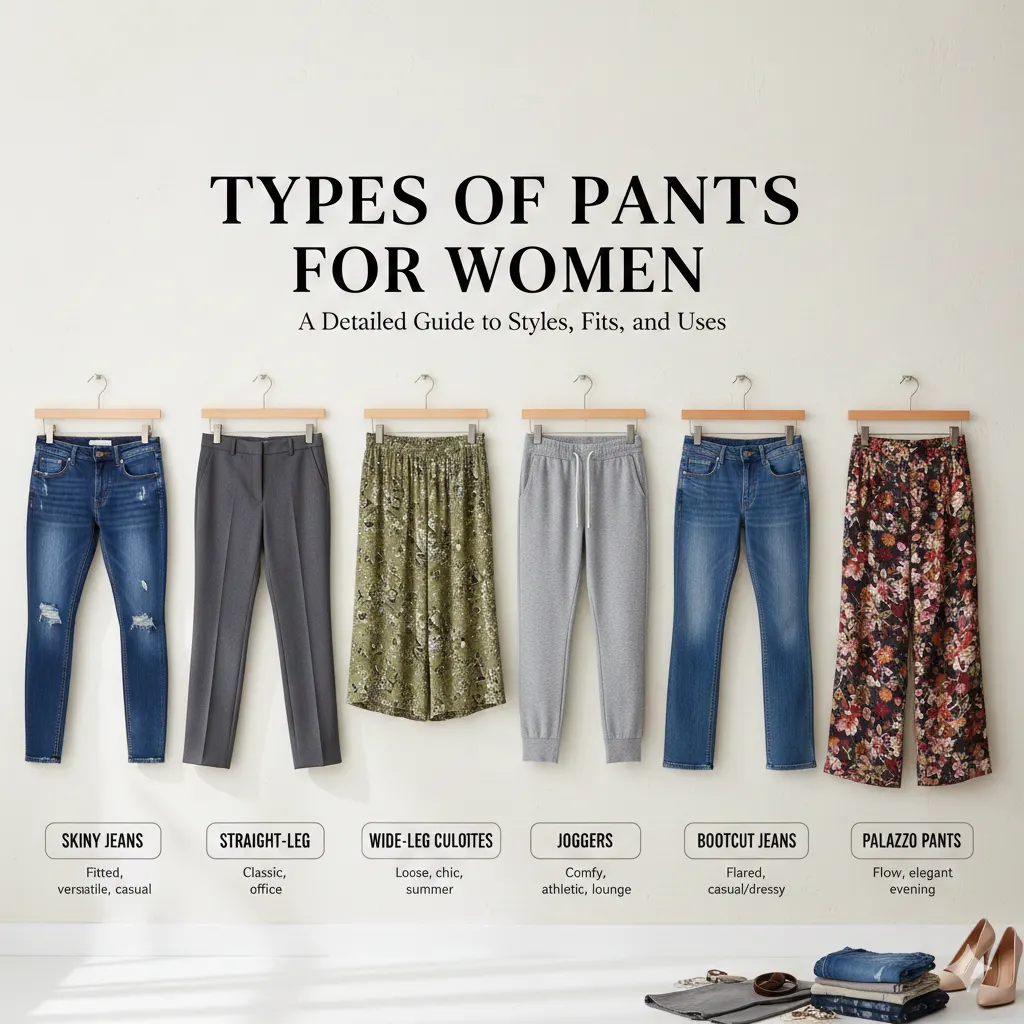
Pants play a central role in women’s wardrobes, offering functionality, comfort, and adaptability across different lifestyles. From professional settings and casual environments to travel and physical activity, women’s pants are designed to meet a wide range of needs. Over the years, the variety of pants available for women has expanded significantly, resulting in distinct styles that differ in fit, structure, fabric, and purpose.
Understanding the different types of pants for women is not only helpful for styling but also for making informed clothing choices based on daily activities, climate, and comfort expectations. Rather than focusing on seasonal trends alone, identifying how each type of pant functions allows for a more practical and long-lasting wardrobe.
This guide explores the most common and widely worn types of women’s pants in detail, explaining their defining characteristics, variations, and appropriate use cases.
This guide explores the most common and widely worn women’s pants styles in detail, explaining how they differ in fit, structure, and practical use.
Table of Contents
Straight-Leg Pants
Straight-leg pants are defined by a consistent width from the hips down to the hem. Unlike tapered or flared designs, these pants maintain a balanced silhouette that does not cling or widen dramatically. Because of their neutral shape, straight-leg pants are considered one of the most versatile options in women’s wardrobes.
They are commonly worn in professional environments because they offer a polished appearance without restricting movement. Depending on fabric choice, straight-leg pants can also work well for casual or semi-formal occasions. Cotton blends are suitable for everyday wear, while wool or structured fabrics are often chosen for office settings.
Wide-Leg Pants
Wide-leg pants are designed with a relaxed fit through the thighs and legs, creating a flowing and breathable structure. These pants provide ease of movement and are often preferred in warmer climates or for extended wear. Unlike straight-leg styles, wide-leg pants create volume, which can add comfort but also a more expressive silhouette.
They are frequently seen in both casual and workwear collections, especially in high-rise designs that balance the loose fit with waist definition. Wide-leg pants are not limited to any single occasion and can be styled for everyday wear, travel, or relaxed professional environments.
Palazzo Pants
Palazzo pants are a more fluid variation of wide-leg pants, known for their exceptionally loose fit and lightweight fabrics. The defining feature of palazzo pants is their dramatic flare from the waist down, often made using soft materials such as rayon, chiffon, or crepe.
These pants are commonly worn in casual or leisure settings, particularly in warm weather. Due to their flowing nature, palazzo pants are less structured than standard wide-leg pants and are generally chosen for comfort rather than formal appearance.
Slim-Fit Pants
Slim-fit pants follow the natural shape of the legs without fitting tightly against the skin. They offer a streamlined look while allowing more mobility than skinny pants. This balance makes slim-fit pants a popular choice for workplaces where a clean, modern appearance is preferred.
These pants often feature stretch fabrics that improve comfort during long hours of wear. Slim-fit pants are versatile enough to transition from professional environments to casual settings with minimal styling changes.
Skinny Pants
Skinny pants are designed to fit closely from the waist to the ankle. Unlike slim-fit styles, skinny pants rely heavily on stretch materials to maintain comfort. Their close fit highlights the shape of the legs and is often chosen for casual or fashion-focused outfits.
While skinny pants are widely worn, they may not be suitable for all occasions, particularly in formal or professional environments where structured silhouettes are preferred. Fabric quality plays an important role in comfort, especially for extended wear.
Tapered Pants
Tapered pants are wider at the hips and thighs and gradually narrow toward the ankle. This design allows comfort in the upper leg area while maintaining a refined appearance at the hem. Tapered pants are frequently used in tailored workwear and modern casual styles.
They are often selected for their ability to accommodate movement while still appearing structured. This makes them suitable for office wear, meetings, and smart-casual environments.
Cargo Pants
Cargo pants are characterized by their functional pockets, originally designed for utility purposes. In modern women’s fashion, cargo pants have been adapted with slimmer profiles and softer fabrics, making them more wearable for everyday use.
Although traditionally associated with casual or outdoor wear, contemporary cargo pants are now styled for urban and travel settings. Their practicality makes them suitable for situations where storage and durability are important.
Chinos
Chinos are lightweight pants made primarily from cotton fabric. They are known for their clean finish and slightly tailored look, positioning them between casual pants and formal trousers. Chinos are commonly worn in business-casual environments and are valued for their comfort and versatility.
Their simple structure allows them to be styled easily with a variety of tops and footwear, making them a reliable option for daily wear.
Formal Trousers
Formal trousers are specifically designed for professional and corporate settings. These pants typically feature structured waistbands, pressed creases, and tailored fits that maintain a refined appearance throughout the day.
Fabric selection plays a key role in formal trousers, with wool blends and wrinkle-resistant materials being common choices. These pants are intended to provide a consistent and professional look rather than prioritizing trend-based styling.
Jogger Pants
Jogger pants combine comfort-focused design with casual styling. They usually feature elastic waistbands and cuffed hems, allowing ease of movement and flexibility. Joggers were originally associated with athletic wear but have since evolved into everyday casual clothing.
Modern joggers are often made with improved fabrics that enhance durability and appearance, making them suitable for relaxed outings and travel.
Track Pants
Track pants are designed primarily for physical activity and sports. They are typically made from lightweight, breathable fabrics that support movement and moisture control. Compared to joggers, track pants focus more on athletic performance than casual style.
Leggings
Leggings are form-fitting pants made from stretchable knit materials. They are commonly used for exercise, home wear, and layering purposes. While leggings provide maximum flexibility, they differ from trousers in structure and are not generally intended for formal or professional use.
Capri Pants
Capri pants fall between the knee and ankle in length. They are usually worn in warm weather and offer a balance between coverage and breathability. Capri pants are best suited for casual environments and are not typically used in formal settings.
Culottes
Culottes are cropped pants with wide legs, often resembling skirts when worn. They combine the comfort of pants with the visual flow of a skirt. Culottes are commonly chosen for semi-formal or smart-casual occasions, depending on fabric and cut.
How Women’s Pants Are Classified
Women’s pants are generally categorized using a combination of structural and functional elements. The most important factors include fit, leg shape, rise, fabric, and intended use. Fit determines how closely the pants follow the body, while leg shape affects the overall silhouette. Rise refers to how high the waistband sits on the waist, and fabric influences comfort, durability, and formality.
Purpose also plays a major role in classification. Some pants are designed primarily for professional environments, while others prioritize relaxation, athletic movement, or climate suitability. Understanding these distinctions helps clarify why certain pants are more appropriate for specific situations.
Choosing the Right Type of Pants
Selecting the right pants depends on several factors, including daily activities, comfort preferences, climate, and dress requirements. Each type of pant serves a specific function, and no single style is suitable for every situation. Building a wardrobe with a variety of pant styles allows for flexibility and long-term wearability.
Conclusion
The wide range of pants available for women reflects the diversity of modern lifestyles. From structured formal trousers to relaxed palazzo pants, each style addresses a specific need. Understanding the differences between these types of pants helps in making practical wardrobe decisions that focus on comfort, suitability, and durability rather than short-term trends.